Posts

Cache-Control(Http Header)

 The Cache-Control HTTP header holds directives (instructions) for caching in both requests and responses. A given directive in a request does not mean the same directive should be in the response. Syntax: Caching directives have the following rules to be valid: Case-insensitive, but lowercase is recommended. Multiple directives are comma-separated. Some directives have an optional argument, which can be either a token or a quoted-string. (See spec for definitions) Cache request directives Standard Cache-Control directives that can be used by the client in an HTTP request. Cache-Control: max-age=<seconds> Cache-Control: max-stale[=<seconds>] Cache-Control: min-fresh=<seconds> Cache-Control: no-cache Cache-Control: no-store Cache-Control: no-transform Cache-Control: only-if-cached Cache response directives Standard Cache-Control directives that can be used by the server in an HTTP response. Cache-Control: must-revalidate Cache-Control: no-cache Cache-Control: no-s...
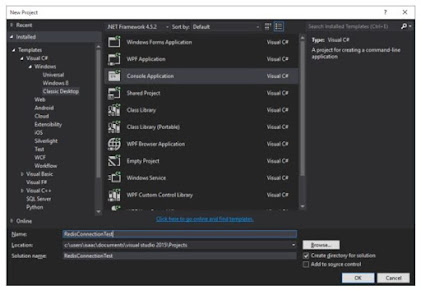
Redis Cache DB setup with C#

Image
  Redis is a NoSQL key-value cache that stores the information in a hash table format, providing the possibilities to store different types of structured data like strings, hashes, lists, sets, sorted sets, bitmaps and hyperloglogs Installing REDIS on Windows  Officially Redis doesn't have an official version for windows, but being an open-source project, there is a fork by MSOpenTech where there is the possibility of running Redis on Windows.  Requirements to install Redis: 64 bit OS The windows package manager Chocolatey In order to install Redis on Windows using Chocolatey, we need to run a simple command with the command prompt (as administrator) and just follow the instructions: C:\> choco install redis-64  Once the installation is complete, we can run the Redis server instance using the command redis-server.exe. If you have problems running the command and get the error "Redis-server is not recognized as an internal...etc" is because chocolatey failed regist...

Redis - Cache DB Introduction

  Redis :  It stands for Remote Directory Server is an in-memory data structure store, used as a database, cache, and message broker. It is a disk-persistent key-value database with support for multiple data structures or data types Redis is an open source (BSD licensed), highly replicated, performant, non-relational kind of database and caching server. Redis provides data structures such as strings, hashes, lists, sets, sorted sets with range queries, bitmaps, geospatial indexes, and streams.  Redis has built-in replication, Lua scripting, LRU eviction, transactions, and different levels of on-disk persistence, and provides high availability via Redis Sentinel and automatic partitioning with Redis Cluster. You can run atomic operations on these types, like appending to a string; incrementing the value in a hash; pushing an element to a list; computing set intersection, union and difference; or getting the member with highest ranking in a sorted set. To achieve top perfor...

Git Branching

Image
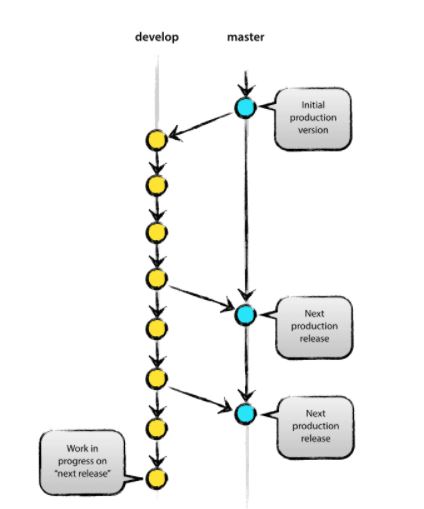
 Git was designed from the ground up as a distributed version control system. Being a distributed version control system means that multiple redundant repositories and branching are first class concepts of the tool. In a distributed VCS like Git every user has a complete copy of the repository data stored locally, thereby making access to file history extremely fast, as well as allowing full functionality when disconnected from the network. It also means every user has a complete backup of the repository. Branches in Git are a core concept used everyday by every user. In Subversion they are more cumbersome and often used sparingly. The reason branches are so core in Git is every developer's working directory is itself a branch. Even if two developers are modifying two different unrelated files at the same time it's easy to view these two different working directories as different branches stemming from the same common base revision of the project Main Branches The main reposito...

Understanding OAuth2

 What is OAuth2? OAuth2.0 is an open authorization protocol, which allows accessing the resources of the resource owner by enabling the client applications on HTTP services such as Facebook, GitHub, etc. It allows sharing of resources stored on one site to another site without using their credentials. It uses username and password tokens instead. Why Use OAuth 2.0? You can use OAuth 2.0 to read data of a user from another application. It supplies the authorization workflow for web, desktop applications, and mobile devices. It is a server side web app that uses authorization code and does not interact with user credentials. Features of OAuth 2.0 OAuth 2.0 is a simple protocol that allows to access resources of the user without sharing passwords. It provides user agent flows for running clients application using a scripting language, such as JavaScript. Typically, a browser is a user agent. It accesses the data using tokens instead of using their credentials and stores data in online...

Email Sending through O365 using OAuth Protocol

  Microsoft Office365 EWS servers have been extended to support authorization via the industry-standard OAuth 2.0 protocol. Using OAUTH protocol, user can do authentication by Microsoft Web OAuth instead of inputting user and password directly in application Microsoft / Office 365 OAuth + EWS We can use the OAuth authentication service provided by Azure Active Directory to enable our application to connect with IMAP, POP or SMTP protocols to access Exchange Online in Office 365. To use OAuth with our application we need to register application on Azure Active directory and other steps also we need to do to get the access token back. Below are the steps   To use Microsoft/Office365 OAUTH in your application, you must create an application in  https://portal.azure.com . Sign into the Azure portal using either a work or school account or a personal Microsoft account. If your account gives you access to more than one tenant, select your account in the top ...

What is Pen Testing or Ethical Hacking?

PEN TEST or ETHICAL HACKING? Pentesting , also known as penetration testing or ethical hacking , is a security assessment, an analysis, and  progression of simulated attacks on an application (web, mobile, or API). The objective is to penetrate the application security defenses by looking for vulnerabilities. These are usually weaknesses or flaws that an attacker could exploit to impact confidentiality, integrity, or availability. The output of a pentest is a list of vulnerabilities, the risks they pose to the application or network, and a concluding report with an executive summary of the testing along with information on its methodology and recommendations for remediation. The vulnerabilities found during a penetration test can be used to fine-tune your security policies, patch your applications or networks, identify common weaknesses across applications, and  in general strengthen your entire security posture. Hacking often refers to the unauthorized intrusion into a n...

Cross-Site-Scripting(XSS)

XSS It is one of the most common application-layer web attacks. XSS vulnerabilities target scripts embedded in a page that are executed on the client-side. The concept of XSS is to manipulate client-side scripts of a web application to execute in the manner desired by the malicious user. Such a manipulation can embed a script in a page that can be executed every time the page is loaded, or whenever an associated event is performed. XSS can be classified into 3 types 1. Stored XSS(Persistent XSS) 2. Reflected XSS 3. DOM Based XSS Stored XSS The most damaging type of XSS is Stored XSS, an attacker uses stored XSS to inject malicious content thru request payload, most often JavaScript code, into the target application. If there is no input validation this malicious code is permanently stored in DB. so, when victims opens the affected web page in a browser the it will process and execute the XSS attack. Reflected XSS This the most common type of XSS. in this case, the attackers payload has...

Test Case

What is Test Case? In software engineering, a test case is a specification of the inputs, execution conditions, testing procedure, and expected results that define a single test to be executed to achieve a particular Different types of Test Cases Functionality Test Cases Functionality test cases are used to discover if an application’s interface works with the rest of the system and its users. The tests identify the success or failure of functions that the software is expected to perform. The cases are a type of black-box testing that uses for its base, the specifications or user stories of the software under test. This allows the tests to be performed without needing access to the workings or internal structures of the software being tested. The QA team are usually the writers of functionality test cases because the task falls within normal QA processes. They can be written and run as soon as development makes a first function available for testing. To help steer development, they can...

Cross-Site Scripting (XSS) front-end security details for Ruby on Rails developers

Cross-Site Scripting is a security hole that allows attackers to inject and execute JavaScript on your website. The cause of the problems: Data changes context XSS is a very specific problem, but it’s caused by a general issue that affects all computer systems and programming languages: Applications process data using different programming languages and formats (for example Ruby, JavaScript, SQL; plain text, HTML, JSON, CSV).  Data moves from one context into another context because languages and formats are nested or chained. Data that has a specific meaning in one context gets different meaning when put into another context. In context one, data is just plain text. In another context , it may be interpreted as code.  Untrusted content Web applications deal with untrusted content all the time. This is data that isn’t created by the service provider, developers or trusted parties. It may contain errors, it may be incomplete, it may not comply with syntactical rules....